Hey! I just found out that the ebook version of Daughter of Light is on sale. Here is the link: Daughter of Light-Amazon
Enjoy!

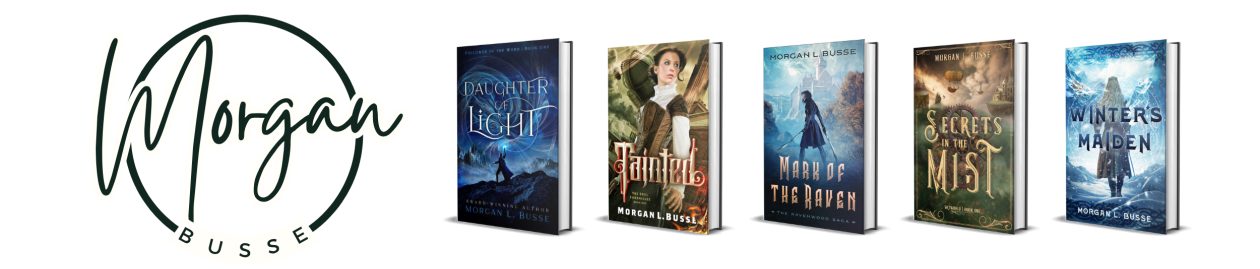
Hey! I just found out that the ebook version of Daughter of Light is on sale. Here is the link: Daughter of Light-Amazon
Enjoy!
 Hi everyone! Welcome to another coffee date with moi 🙂 Here is the question for this month:
Maegen asks: “How do you go about finding a critique group or critique partner? How important is that in finishing your novels?”
When I first started writing, I wrote solo. I didn’t know a lot about writing, or that people met to share their work and help each other out. It wasn’t until two years into my writing journey that I discovered the Oregon Christian Writers and attended my first “mini” weekend conference.
After that, I attended the Mount Hermon Writers Conference where I was part of a small mentoring group led by Randy Ingermanson. We shared our work online in a closed group for a year before we each slowly drifted our own way.
Those were the only two times I’ve been part of anything like a critique group. For the most part, I’m still a solo writer. There are benefits to critique groups, granted you find the right one. By that I mean a group that is open, kind, mature, and know how to critique gracefully. Fortunately I was never part of a “bad” group, but I heard enough horror stories to decide that I didn’t really want to be part of one.
However, I have always worked with beta readers: people who are not part of the writing world who can give me feedback on my story. Then I work with my editor who knows the in’s and out’s of fiction (plot, POV, etc…). And recently I have found a critique partner who worked with me on Heir of Hope. We met years ago at a writer’s conference, stayed in touch, and eventually our relationship evolved into one where we help each other out: she’s great at editing, and I’m decent at story content.
If you are interested in finding a critique group, there are a couple places to look that I’ve heard are good: ACFW (American Christian Fiction Writers) has a couple groups, Mount Hermon has a mentoring track which can turn into a critique group, and wherethemapends used to have a critique group for speculative writers, but I don’t know if that one is around anymore.
I think the best thing for a beginning writer is to learn the basics: read books on writing, go to conferences, and write, write, write! Randy Ingermanson once said you need to write a million words before you start writing something worth reading. I rewrote Daughter of Light a couple times before I hit that millionth word mark 😉
Here is a blog I wrote a year ago with the names of books, conferences, etc… that helped me as a writer: How to Become a Writer
Write your story first, then find a group, partner, or beta readers. A rough draft will contain your most original voice and the heartbeat of your story. Discover who you are as a writer, and your story, before you pass it on to others. And find those people who are invested in you first as a writer, not just in critiquing your work. Those are the people you hand your “baby” to.
I hope that helps. Good luck, Maegen!
If you have a question you want answered during next month’s coffee date, feel free to leave your question in the comments below 🙂
I was reading an article on Christian leadership the other day and realized how many parallels there were between the key points and my own writing. So I decided to share my thoughts (and a glimpse behind the philosophy of my own writing).
Carey Nieuwhof, the author of 21 Key Learnings from Andy Stanley and the Drive Conference, will be in bold; my own thoughts in normal text.
We don’t tailor content of our services for unchurched people, but we do tailor the experience.
Same with my writing. I don’t dumb down or take out the spiritual component of my stories. But I also don’t preach. I use the medium of fiction writing to tell a story with deep questions and wonder.
People learn best in emotionally charged environments.
What is more emotional than fiction? Words engage both our hearts and our minds. They are a way to reach inside a person and touch his or her soul. That is the goal of my writing.
We leverage common experiences and emotions, not belief systems.
When I write, I am not writing a paper on why you should believe what I believe, I am writing about common experiences and emotions like betrayal, fear, longing for love and acceptance, and forgiveness.
A goal is something you accomplish. A win is something you experience.
So true! A goal is to finish the manuscript. A win is when a reader writes to me and tells me how my story impacted her life. I am in control of my goals, but I cannot control my wins. However, I love to experience a win 🙂
Public loyalty buys you private leverage. Criticize privately, praise publicly.
I am a firm believer in this. Public humiliation never helped anyone (or at least me). But someone who cares about me (and I know they care about me), have the keys to privately criticize me. I had to learn early on in my writing career who to hand those keys to, and to not let in those people who did not hold those keys. I also apply this to how I approach other writers. Praise publicly and if I have that kind of relationship, critique privately.
The loudest critics in the church are people who have become missionally disengaged. Why listen to people who are missionally disengaged give you feedback on your mission?
This goes back to my previous statement. Everyone has an opinion in this day and age and they can post it everywhere. But that doesn’t mean they have earned the right for me to listen to them. A lot of people are only out to prove a point or to be right. So why listen to people who aren’t first invested in me as a human being?
Kids begging their parents to go to church beats parents begging their kids to go to church. Invest in your family ministry environments.
Change this to people begging the author to keep writing beats author begging readers to read their books. Invest in your craft, in your genre, in your skills. But don’t forget to dream and imagine. That is what the reader wants to share with you: your wild, crazy, amazing story.
One more thought to counterbalance this: remember you are not perfect and forgive the mistakes you make (whether that is a typo, grammar, whatever). Continue to strive to be the best you can be, but remember you are human 😉
So, yeah, I always find interesting parallels between two seemingly different things. I’m weird like that 🙂 Hopefully you found some insight as well. And I would encourage you to look at the original article. Great ideas and thoughts on how Christians (and churches) can be effective and love people more.
 Every year I like to look back and see what happened, and look forward to what the new year will hold. So here’s a look at 2014 and a sneak peak at my plans for 2015.
2014 brought a lot changes, starting off with the sale of Marcher Lord Press. My publisher underwent a change in ownership and name. It’s different now, but not bad. I am looking forward to working more with Enclave Publishing in 2015.
A year ago I was finishing the last book in the Follower of the Word series. Heir of Hope took me almost a year to write, but it was a year well spent. I can’t wait to share with you the conclusion to Rowen, Lore, Caleb, and Nierne’s journey. Right now the projected release date is March 23rd.
On that note, I hope to reveal the new covers that were commissioned for the Follower of the Word series sometime this month. They are amazing, if I do say so myself ;). So be watching for a cover reveal!
I am now working on a new series. It is a Victorian steampunk (which is a definite change from fantasy). Steampunk is a genre that can be set in either a Victorian or western time period and usually involves steam-powered machinery rather than advance technology.
I’m about a third of the way through the rough draft of the first book, Tainted. I forgot how hard rough drafts are (especially when starting a new series), but I am also enjoying the new characters and settings. Right now the series is under consideration by a publisher, but I don’t know yet if it will be acquired. In either case, I plan on finishing this series :).
So that’s what 2015 is shaping up to look like for my writing, and what an exciting year it looks to be!
Hi everyone! I hope you all had a great Christmas 🙂
Since I missed my coffee date in November, I wanted to make sure I did one in December, so although it’s not Friday, today is a good day to answer a couple questions from my readers. So here we go!
Mary Jo asks: “I am always impressed by the way you describe the settings, places, surroundings in such detail. You make us feel as if we are right there with your characters. Do you see the settings you describe in your mind before you put them in print? Or do you use some other process?”
One thing my editor taught me was the importance of setting, especially in a fantasy book where you are introducing your readers to a whole new world. I actually have a list I follow of things to include and I establish the setting at the beginning of the chapter or scene so the reader can have the place firmly set in his or her mind. To find the list I use, here is a link to it (#96): www.wherethemapends.com
But how do I figure out what a place should look, smell, and feel like? One of my favorite sites to use is Pinterest. I love looking at pictures and figuring out what a place looks like, or the room, or the castle, or the person. I also use google a lot for research. And it doesn’t hurt to have an active imagination :). If you want to see some of my research on Pinterest or follow my boards, click here: http://www.pinterest.com/morganlbusse
Lastly, one of the secrets to a great setting is to use as many of the senses as you can. I have always had an very sensitive nose and pick up more scents than the usual human, which has come in handy with putting smells into my scenes. I also use all my experiences such as places I have visited, or the feel of something, or how something tasted, and use it to make a scene come more alive.
Thanks for the great question!
Camilla asks: ” I love to hear about situations in books that actually happened in REAL life! Your life or a family member’s, perhaps?”
In Son of Truth when Nierne realizes she doesn’t believe the Word will save her, that was based on an event in my life. I had always believed God would take care of me until the day came when I needed Him the most. In that moment, however, I did not believe He would come through. It was faith shattering for me (I was a young pastor’s wife at the time). How could I not believe God? But I couldn’t deny what was deep inside my heart. It was the truth. It is easy to believe in God when everything is going your way. But it is hard to step off the cliff and believe God will catch you. (Here is the post I wrote on that: No Faith, Know Faith)
Since then, I have come up again and again to that point of do I believe God will take care of me: When my husband was let go of a church, when we had no money, when my son was very sick. Each time it has been a battle of my own self-preservation versus letting go and believing God. I cling to the edge and cry. I don’t want to let go. But God gently helps me let go and carries me down.
He has always caught me. He has always taken care of me. That was what I wanted to share through the character of Nierne. She grew up as a scribe and knew everything about the Word, but she had a long way to go to where her faith was transferred from her head to her heart.
Thank you, Camilla, for the great question!
If you have any questions you want to ask, whether it is about my life, my writing, or my stories, feel free to post it in the comments below or email me for my coffee date next month. I love interacting with my readers and this is one way where we can get to know each other 🙂
Hello and welcome to another Friday Coffee Date where I answer questions from my readers. I received some great questions this week and can’t wait to dig in. So here we go!
Maegen asks: “I don’t remember if it said in the book or not, but I was curious, how old is the character Rowen in the first book?“
Rowen Mar is the main character in my epic fantasy Follower of the Word series (to find out more, go to Daughter of Light, the first book).
I give hints about Rowen’s age, the fact that other women her age have already married (bonded) and had children, but I don’t come out and say her age.
Rowen is about twenty-two years old. In a society like this one, any woman over twenty and still unmarried would be considered strange and on her way to spinsterhood.
Thanks, Maegen, for the great question!
Patrick asks: “When you write, what are things you use to create your writing space? Music, clean desk, at home, at coffee shop, etc.“
When I’m writing a rough draft, I don’t have a set spot. I write everywhere: on my bed, on the couch, at a coffee shop, wherever I can find some peace and quiet and my imagination can work. Sometimes I listen to music that puts me into the scene or character.
However, when I’m editing, I sit at my desk with calm music playing and a cup of coffee or tea. I seem to need a more stable environment for that part of my brain to work 🙂
And if I’m on a deadline, you can find me at Mojo’s (a local coffee place) with a big pot of tea and ear buds in. Tea and music help me really focus in on my writing, and I force myself to sit there and write until the teapot is empty.
Thanks for asking, Patrick!
If you have any questions, whether it’s about writing, my life, or my stories, feel free to leave them in the comments below and I will be happy to answer them in next month’s coffee date post 🙂
 Many of you are anxiously awaiting the final book in the Follower of the Word series, so I thought I would catch you up on what I know and what I can share.
First, I just spent the last three weeks finishing the main edits for Heir of Hope. Whew! My brain is tired! But the final story is so much better now 🙂
Tomorrow I turn in the manuscript.
So what happens next?
Micro edits. That’s where my editor and I polish up every single sentence. We hope to be done with that by the first week of November. Then I’m pretty much done until the galleys arrive, the final proof before the story heads off to the printers.
The cover is also in the works right now and I should be seeing something this month (can’t wait!).
Then pre-release stuff (like early reviews and possible endorsements, along with a cover reveal).
Then finally it will be here for all of you to read. Having just finished the book again this afternoon, I can tell you Heir of Hope is definitely worth the wait. It has been an emotional journey for me and there were days I wasn’t sure I would ever finish this book. But here it is and almost done.
So there you go. Less than six months to the release date (barring any unforeseen circumstances). In the meantime, stay tuned for more details such as the cover, blurbs, and other exciting things. And if you want to really make sure you don’t miss anything, consider signing up for my newsletter.
Thank you for being such great readers and for your patience 🙂
Hi everyone! Due to a blog hop last week, I had to postpone my coffee date until today. For those visiting for the first time, every fourth Friday of the month I open up my blog to questions from my readers. I have two questions leftover from last month, so here we go!
Robert asks: “Who (or which authors) inspired you to become an author?”
Hmmm, I never thought about being an author until they day I walked into a Christian bookstore and asked to see their fantasy section (stop laughing!). So you could say it was the lack of speculative fiction that inspired me to write 😉
However, there are a few authors that I love and looking back, are probably the biggest reason I write what I do. The first one is J.R.R. Tolkien.
My dad introduced me to The Hobbit at a young age. By the time I entered my senior year in high school, I had read through The Hobbit, the Lord of the Rings, and the Silmarillion at least three times. I loved the world Tolkien created, especially how he wove myths from our world into his world (I based my senior writing project on this very subject).
Later on, I discovered Terry Brooks and a whole new fantasy world to explore. I loved the adventures and world-building, but I also enjoyed his character development. Characters didn’t just go on journeys, they changed, matured, and sacrificed. That hit home for me.
Lastly, my work has been compared to Terry Goodkind’s Sword of Truth series. I’ve read the first book and have to agree. Neither of us write about fantasy creatures like dragons, orcs, or elves. Rather, we focus on people with power and how it changes the world.
Thanks for asking, Robert!
Lesley asks: “How do you balance it all–family, being a wife, personal time, writing (your job)?”
I decided when I started writing almost ten years ago that my family came first. Writing would always be there, but they would not. Of course, that means it takes me longer to put out a book, but I haven’t missed a moment with my kids or husband.
I write everyday, four days a week. My goal is 500 words a day, but usually I can write more than that. Friday is date day with my husband and nights and weekends are for my kids. Of course, when a deadline approaches or the edits come back with a two-week turnaround, I have to put in the hours, but my family knows I’ll be back when I’m done.
Great question, Lesley!
Feel free to leave any questions you have in the comments below and I’ll be happy to answer them next month during my coffee date Friday!
 Now, for the winner of the Fall into Book Blog Hop!
Drum roll please…
Ryebrynn! You are the winner of the kindle copy of A Time to Die! Congratulations! I will be emailing you so we can get that book to you 🙂
And while I’m on it, today I am featured on Real Life & Character Romance where I share how I met my husband and give some hints into the romance blossoming between the assassin and scribe in my Follower of the Word series. Haven’t read my books yet or want to give a copy to a friend? Then head on over and comment for a chance to win a copy of either Daughter of Light or Son of Truth!
http://shannonvannatter.com/morgan-l-busse-real-life-character-romance
Thanks, everyone!
 Voice. That elusive part of writing. The part that distinguishes one writer from another. Voice is hard to nail down, but once found, brings a uniqueness to one’s writing.
So what happens when your voice doesn’t match your genre?
I write fantasy. When most people think of fantasy, they think of J.R.R. Tolkien. His voice is eloquent, lengthy, lyrical, and full of description. Many fantasy writers share a similar kind of voice. It’s the standard when it comes to this genre.
However, my voice is different. I discovered my voice after writing Daughter of Light, the first book in my epic fantasy series. My writing voice is blunt, short, and to the point. I tell the story in a strong, quick tempo, moving along at a clip pace. Not the style usually employed by the average fantasy writer.
A couple reviews reflected the fact that some readers did not like my voice. They wanted the poetic sound usually found in fantasy.
I didn’t know what to do, so I decided to try and change my voice. I believed I needed to write in a certain way in order to be a fantasy writer. It was like trying to write a square word into a round story. It didn’t work. In fact, those scenes stuck out so bad that my editor called me on it. He gave me the freedom to be me, and to write like me.
So I tossed out those scenes and went back to writing like Morgan.
After reading an article Ralene Burke wrote about voice, I realized even more how important it is to embrace my own voice. Not only is voice my style of writing, it encompasses the stories I write and how I write them. No one can write the stories I write, in the manner that I write them. When I write a story, I draw on the things I have went through: parent’s divorce, death, loss of jobs, loss of house, cancer scares, months of wondering how we will survive, deep depression, and emotional wounds dealt by people.
Through all my life, even in the darkest times, I found hope. And I clung to that hope like a life thread. Through my writing I explore the darkness and how to find hope.
My life and my writing style have formed my voice. To not be true to my voice would be the equivalent of not being true to myself.
Sometimes I don’t like my voice. I wish I could write eloquent prose, running along with beautiful descriptions, long colorful sentences, and dialogue that sounds more ancient.
But that’s not me. I’m Morgan and I will write in Morgan’s voice. After all, I’m the only one who can write my stories 🙂
How about you? As a writer, have you discovered your voice? Did you like it or did you wish you could write like someone else?
Hi everyone! Welcome to my first Coffee Date Friday! Every fourth Friday of the month I am opening my blog up to questions from my readers. You can ask anything from writing to personal (for the most part ;). I first announced this on my Facebook page and already have a couple questions lined up. So I will start with those. If you think of more questions, leave them in the comments and each month I will answer a couple of them. Now let’s begin!
Brenda asks, “How do you keep the momentum of the story going?“
Take out all the boring parts ;). Ok, that’s only part of it. When I first start dreaming up a story, I see different scenes in my head. I keep a folder on my computer with those scenes in it. Then when it comes time to actually write the book, I take those scenes and start moving them around, testing them and seeing if and how they fit together. If they don’t fit, they get axed. If they do, I ask how did my characters end up in those situations?
It’s amazing how our subconscious ties things together. Many times those scenes fall into place, creating the story for me. And then I write it.
There are different story aspects that keep a story going: the romance thread (are they going to fall in love?), the mystery thread (what’s going to happen next?), the villain thread (how is the hero going to stop the villain?), the “make things worse” thread (wow, how is the hero going to get out of that one?), and so on. By using at least one of these per chapter, I keep the reader turning the page. That is how I keep the momentum of the story going.
Thanks for asking, Brenda!
Now for the next question.
Maegen asks, “Do you ever get stuck in a scene or chapter? If so how do you get the story moving again?”
First, I love the way you spell your name! Very unique take on Megan 🙂
Ok, so I made it sound like all I have to do is dream up the scenes, put them together like a jigsaw puzzle and write the story in the previous question. I wish it was that simple. Then I would never get stuck in a scene.
Sadly, there are times when I do get stuck. I call them “plot knots”. It’s where something isn’t working out, or the story is getting boring, or I’ve written myself into a corner and can’t get out. So yes, I do get stuck in a scene or chapter. And that’s when I panic (especially if I’m under a deadline) and wonder why I didn’t just choose to do something else with my life, like become a professional cake baker ;P
So how do I get moving again? Well, if I get the sense that it’s a boring scene, I axe it right then and there. If it’s a scene that is needed but the pieces aren’t working together, I take a break. I go for a bike ride, play a video game, watch a movie, read a book outside my genre, something to give that part of my brain a rest. Usually the scene will come to me that day or the next (and usually right at bedtime too!).
However, there are days when I’m just stumped. That’s when I move on and work on a different part of the book, on a scene and chapter I already have firmly inside my mind until the problem scene works itself out. Luckily those are few and far between.
Thanks for the question, Maegen!
That’s all for today. If you have any questions you would like me to answer next month during my Coffee Date Friday, please leave them in the comments below 🙂
 Morgan L. Busse